
Modern Website Design Trends to Watch in 2026
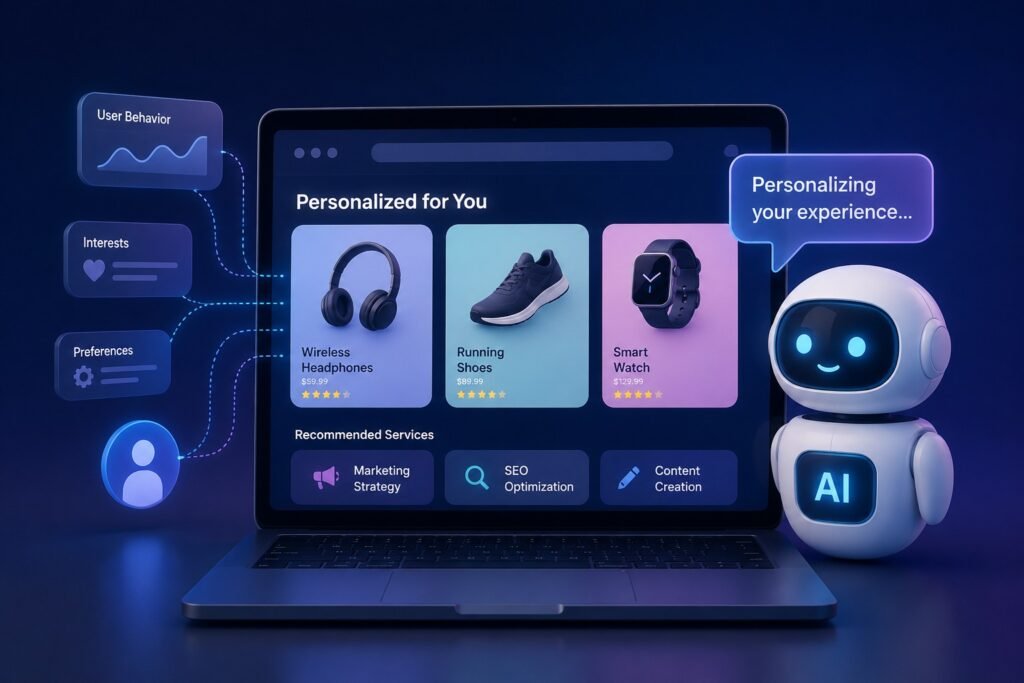
In today’s digital-first world, technological advancement continues to influence how businesses connect with their audiences. A website has become an essential part of a company’s growth, helping businesses build their brand, engage customers, communicate their value, and turn visitors into loyal customers. But what makes a modern website design both stylish and user-friendly? And which trends should businesses follow to stay relevant in 2026? This year, websites are becoming smarter, faster, more accessible, and increasingly focused on user experience. Artificial intelligence, interactive experiences, responsive layouts, and performance optimization are shaping the future of the web. If you are planning to build or redesign a website in 2026, here are the key modern website design trends you should consider. 1. AI-Powered Personalization Artificial intelligence (AI) is no longer limited to science fiction. It has become a powerful technology that is transforming the digital landscape. In 2026, businesses will increasingly use AI to create more personalized website experiences for their audiences. making it an important part of modern website design. AI-powered personalization uses algorithms to analyze visitor behavior, preferences, and interactions and then deliver more relevant content or recommendations. For example, e-commerce websites can recommend products based on browsing behavior, while service-based websites can display relevant services according to a visitor’s interests. However, AI should support the user experience rather than dominate it. Businesses should use AI strategically to make websites more helpful and relevant without making the interface unnecessarily complicated. 2. Minimalism with More Personality Minimalist modern website design continues to be popular, but in 2026, it is taking on a more expressive character. Designers are combining clean layouts with distinctive typography, subtle animations, bold imagery, and carefully selected colors to create memorable brand experiences. Traditional minimalism focuses on using only essential elements. The newer approach combines simplicity with personality. Businesses can achieve this by using visual contrast, creative typography, large headlines, unique imagery, and subtle animations while keeping navigation and content easy to understand. The goal is not to make a website look empty. Instead, it is to remove unnecessary distractions while allowing the brand identity to stand out. 3. Interactive and Micro-Animations Micro-interactions and animations can significantly improve the overall user experience by making websites feel more responsive and engaging. These effects can appear when a user hovers over a button, clicks a link, scrolls through a page, or interacts with a particular element. Even small movements can provide useful feedback and make navigation feel more intuitive. The key in 2026 is purposeful animation. Every animation should have a function rather than being added simply because it looks attractive. Designers and developers also need to consider performance. Excessive animations can increase loading times and negatively affect usability, particularly on mobile devices. In modern website design the best approach is to create interactions that are visually appealing without compromising website speed. 4. Immersive Visual Experiences Websites are becoming increasingly visual. Businesses are using high-quality images, videos, animations, illustrations, and interactive graphics to communicate their messages more effectively. Instead of presenting visitors with large blocks of text, brands are combining visual and written storytelling to explain their products and services. This modern website design trend is particularly valuable for industries such as architecture, interior design, fashion, technology, and creative services. Complex concepts can be transformed into visual experiences that are easier for visitors to understand. Immersive visuals can also help businesses create stronger emotional connections with their audiences and make their websites more memorable. 5. Faster and Performance-Focused Websites No matter how attractive a website looks, poor performance can negatively affect its success. Visitors expect websites to load quickly and respond smoothly, making modern website design and performance optimization an important priority in 2026. Images, videos, animations, scripts, and other website elements need to be properly optimized to maintain a balance between visual quality and loading speed. Designers and developers are therefore focusing on optimized media, efficient code, lightweight animations, and performance-conscious layouts. A successful modern website design strategy should consider website performance from the beginning rather than treating speed as something to fix after development. 6. Mobile-First and Responsive Experiences Mobile devices continue to play a major role in how people access the internet. As a result, the mobile-first approach is becoming increasingly important. Instead of designing a website primarily for desktop and adapting it to mobile later, designers are considering smaller screens from the beginning. Responsive layouts, touch-friendly buttons, readable typography, simplified navigation, optimized images, and appropriate interaction patterns are essential for creating a consistent experience across devices. In 2026, responsive modern website design is no longer simply an enhancement. It is a fundamental requirement for an effective website. 7. Bold and Experimental Typography Typography is becoming more than just a way to present information. It is increasingly being used as a major visual element of website branding and an important part of modern website design. Designers are experimenting with oversized headlines, variable fonts, contrasting typefaces, creative text layouts, and unique typographic treatments to communicate brand messages more effectively. When used correctly, typography can immediately capture attention and establish a strong visual hierarchy. However, creativity should never compromise readability. Text must remain clear and accessible across different screen sizes and devices. Choosing appropriate fonts, spacing, and font sizes is essential for maintaining a balance between visual impact and usability. 8. Accessibility and Inclusivity-Focused Design Accessibility is becoming an increasingly important part of website development. In 2026, designers will continue focusing on creating digital experiences that can be used by people with different abilities and needs. Important accessibility considerations include sufficient color contrast, readable typography, keyboard navigation, alternative text for images, screen-reader compatibility, visible focus indicators, and properly structured web pages. An accessible website provides a better experience for a wider audience. It can also help businesses demonstrate inclusivity while creating a more usable digital environment. Accessibility should therefore be considered throughout the modern website design and development process rather than being treated as an afterthought. 9. Scrolling Experiences and Storytelling Layouts Scrolling is no longer simply a method